Platform Navigation & SaaS Experience Strategy
Theme: UX Vision, Strategy, Design
Focus: Navigation, Design System Integration

My Role: UX Manager
Team: 1 Product Designer, 1 Researcher, Engineering, PM
Responsibilities: Design Management, Stakeholder management
CONTEXT & CHALLENGE
Users struggled to understand where they were in the platform, how to navigate between tools, and how different parts of the SaaS ecosystem related to one another. The experience was fragmented across products like MyQlik, Hub, Management Console, and Analytics clients.
Quotes from user surveys revealed that overall navigation was one of the biggest usability issues, especially for infrequent business users.
This created friction, reduced engagement, and hindered product adoption.
Challenge: How might we empower users through a seamless, intuitive, and scalable navigation framework that enhances orientation, discovery, and platform efficiency?
PROBLEM
We gathered insights through UX audits, user analytics, and support data, identifying four core navigation pain points:
- Users don’t understand where they are in the platform
- Difficulty knowing how to get to other areas or return to a previous context
- Lack of understanding of available tools and their relationships
- Navigation inconsistencies across products
We led stakeholder sessions across Product, Design, and Engineering teams to align business goals, technical feasibility, and UX vision.
Vision elements required to make the experience successful were identified:
| UX Pillar | Description |
|---|---|
| Orientation | Help users understand where they are, where they came from, and what belongs to what |
| Navigation Efficiency | Reduce clicks and time to reach desired tools |
| Consistency | Establish design consistency across clients, products, and roles |
| Scalability | Build a navigation model that supports future SaaS expansions |
SOLUTION
The team underwent design exploration and ideation workshops.
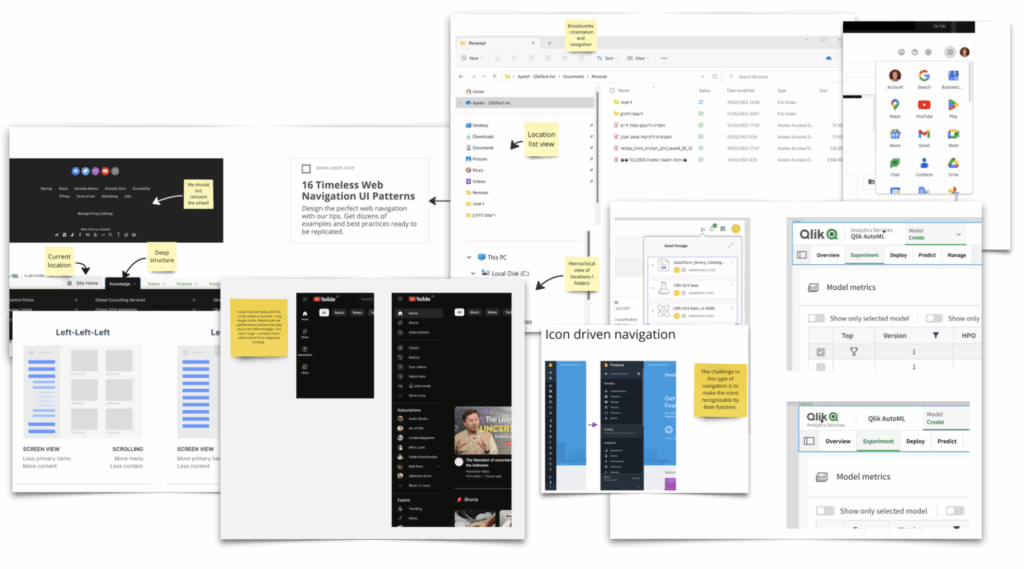
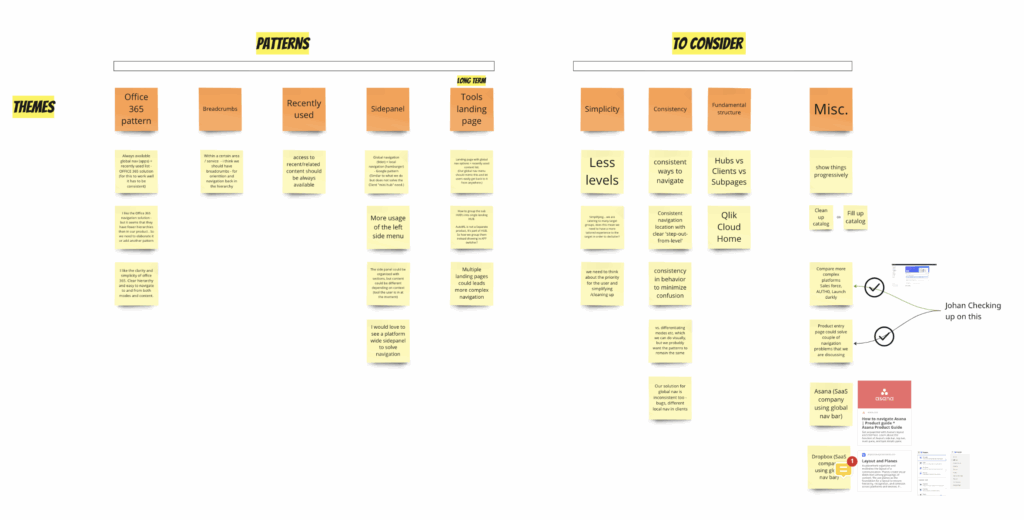
We used an experiment approach, prototyping multiple navigation approaches including: Breadcrumb hierarchies, scalable left-hand menus, global top bars, related content surfacing, and search-driven navigation.
We built 4 prototypes and tested them across 29 users with both new-to-Qlik and experienced participants.
- Users instinctively looked to the top bar first before side navigation
- Breadcrumbs drastically improved orientation and task completion
- A unified global bar improved cross-client consistency and learnability
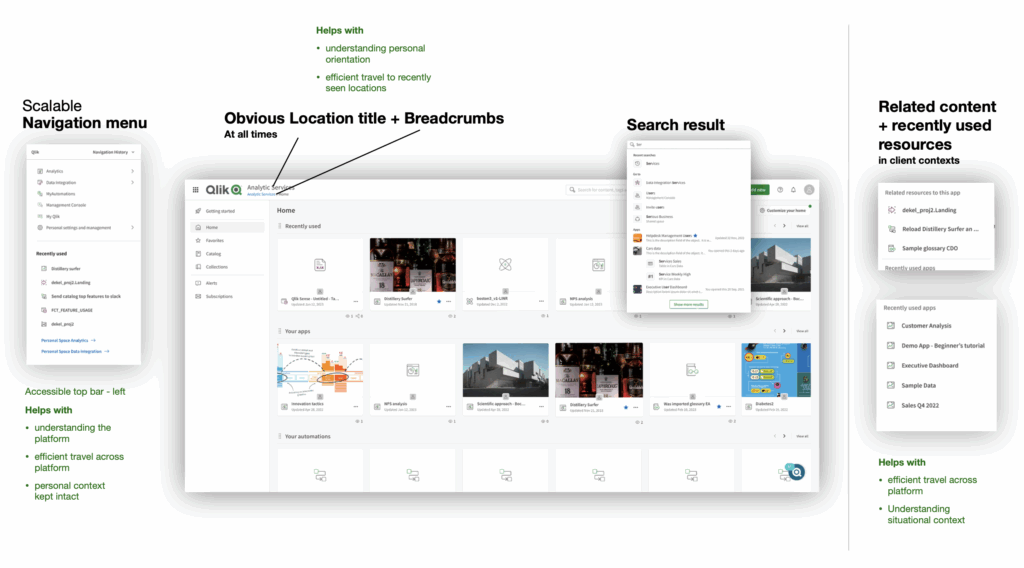
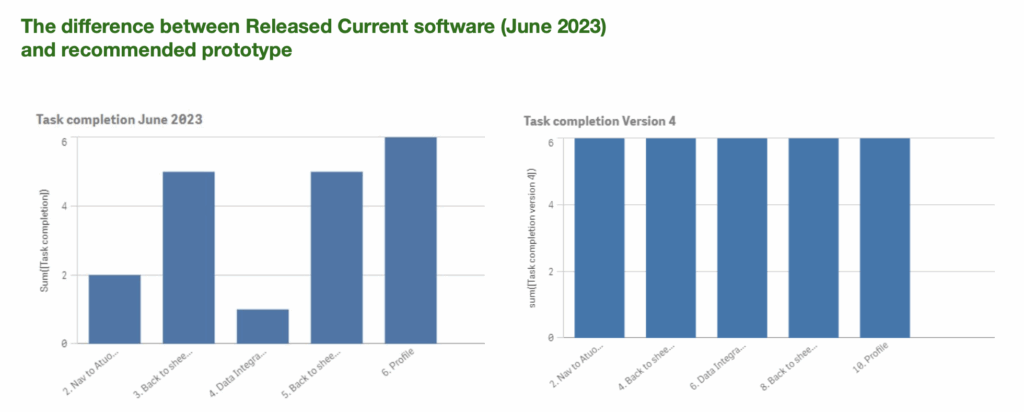
Design iteration stopped when all participants:
- Understood that there are different parts of the platform
- Learned where to find what content in the platform
- Learned how to navigate to the content they need to solve their tasks (jobs
- Knew at all times where they were, how they got there and how to get back to their starting point
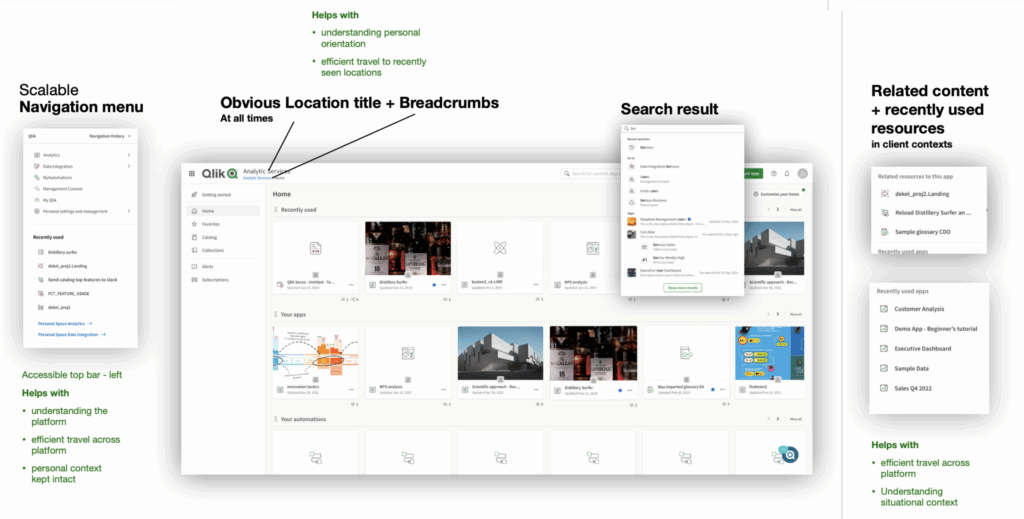
We recommended a Scalable Navigation System featuring:
- Top Bar: Cross-product consistency, identity, notifications, profile access.
- Breadcrumbs: Improved orientation and context clarity
- Scalable Left Navigation Menu: Efficient cross-plaform travel, keeps personal context
- Recently Used & Related Content: Faster Recovery, improves continuity.
IMPACT
✔ Established unified navigation architecture for the Qlik SaaS ecosystem
✔ Aligned cross-functional teams on long-term UX direction
✔ Enabled scalable design decisions through clear UX governance
✔ Paved the foundation for design system integration and future product scalability
LESSONS LEARNED
This project highlights the role of a UX Manager not just as a designer—but as a strategic leader, bridging teams, aligning vision, and making data-informed decisions that scale across products
ARTIFACTS
Artifacts created by the team included:
- UX audit findings and navigation problem definition
- Navigation pattern taxonomy and information architecture maps
- Figma prototypes (multiple navigation models and top bar concepts)
- User testing reports with success metrics and task completion comparisons
- Final navigation framework recommendation and design strategy brief