Designing a Unified UX: A Vision to Transform Halogen’s Platform Experience
Theme: UX Vision
Focus: Leadership, Strategy, Storytelling, Planning
My Role: Head of Design, Lead Design Strategist
Team: 1 Product Designer, 1 Researcher, Engineering, PM, CX, Product Strategy
Responsibilities: Vision design, workshop facilitation, executive storytelling, experience strategy, design system alignment
CONTEXT & CHALLENGE
Halogen’s platform had grown across multiple products and workflows, leading to fragmented experiences, inconsistent UI patterns, and increasing usability challenges for enterprise users. Teams lacked a shared design direction, which limited efficiency, clarity, and customer satisfaction.
Challenge: How might we transform the Halogen Talent Management System into a modern, engaging, and scalable platform by reducing UX debt, modernizing design, and elevating user engagement across roles and devices.
PROBLEM
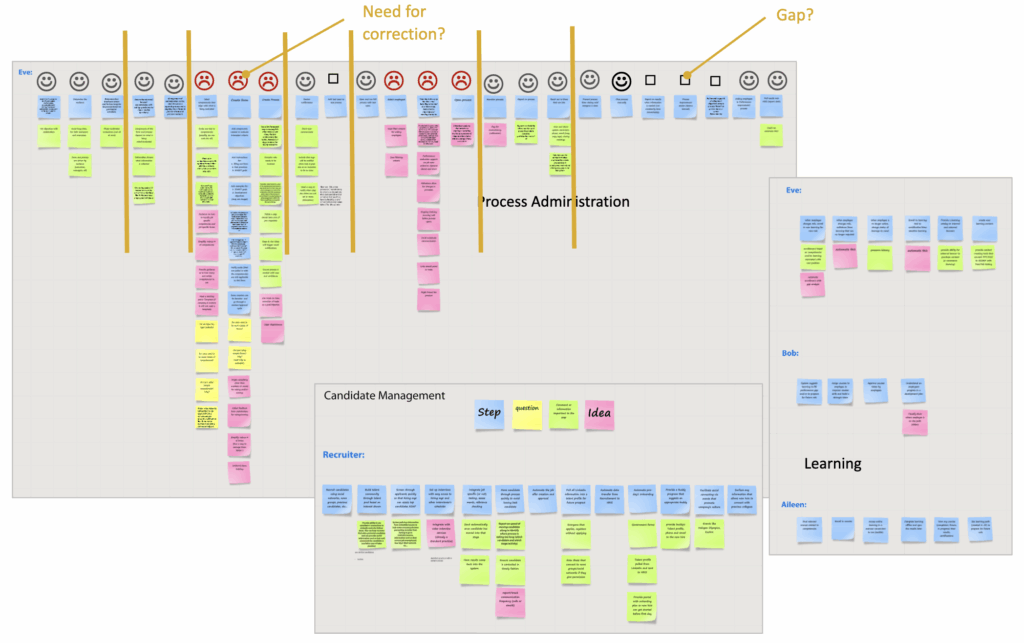
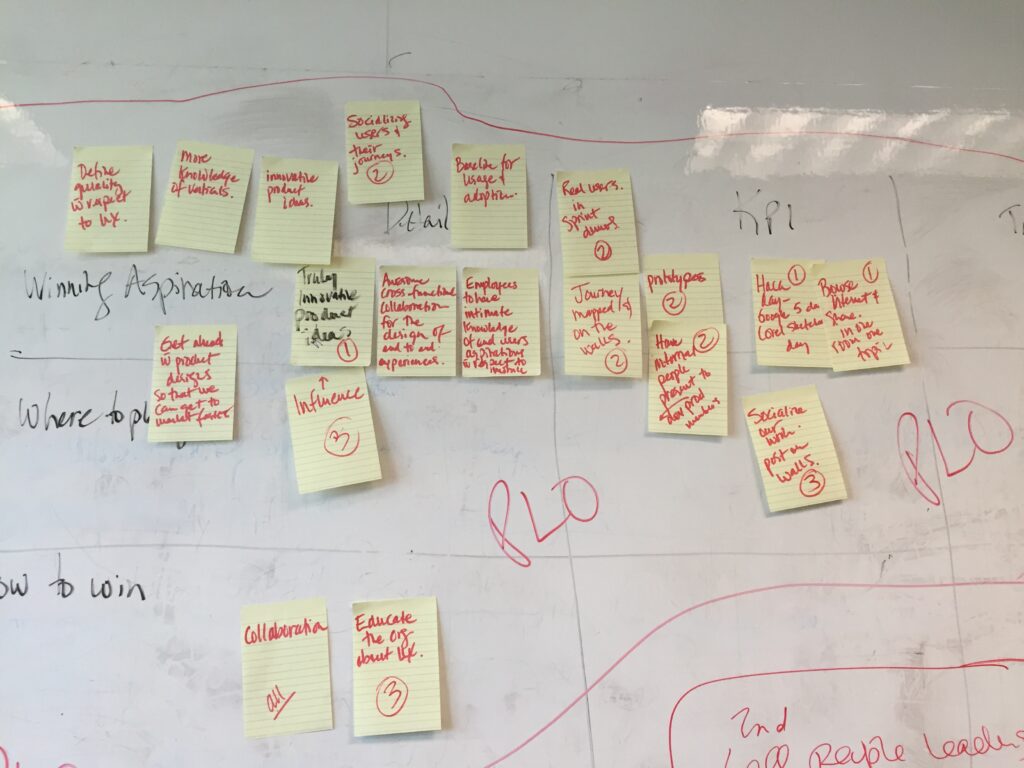
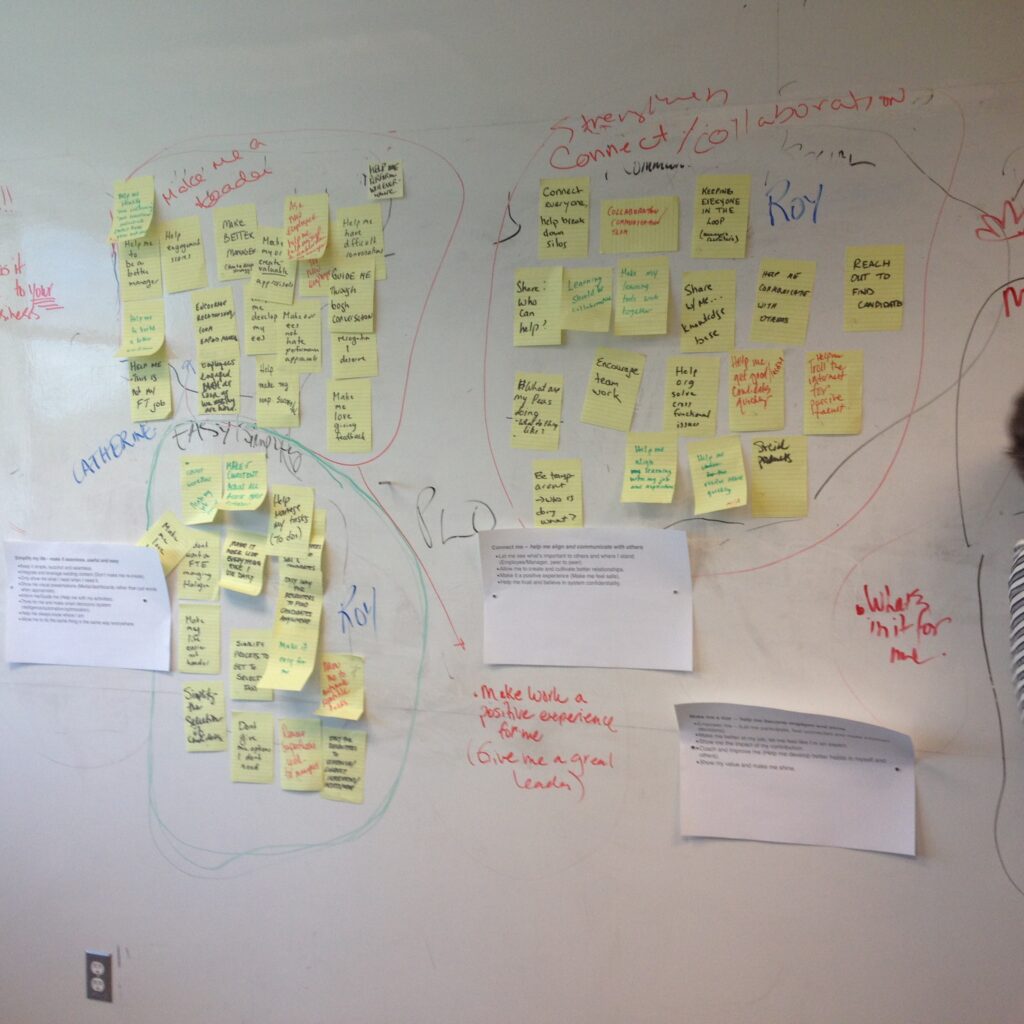
In my role as head of design, I led the discovery and alignment by having the team conduct expert UX audits of key workflows, synthesizing usability data and analytics, and facilitating stakeholder sessions to align user needs with business goals.
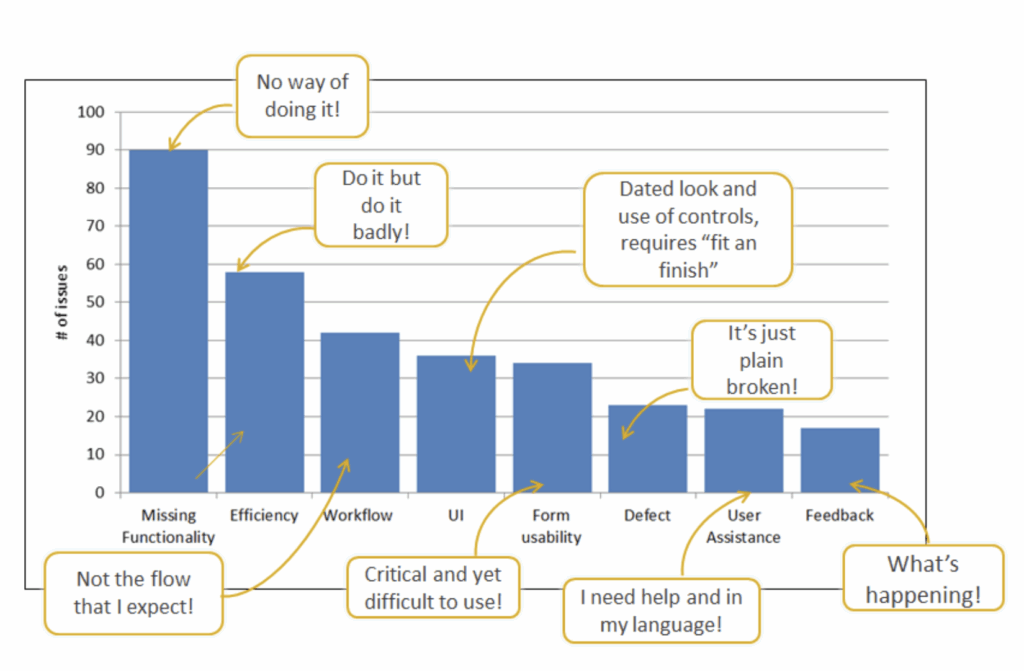
What we learned, the experience had:
- A dated visual design
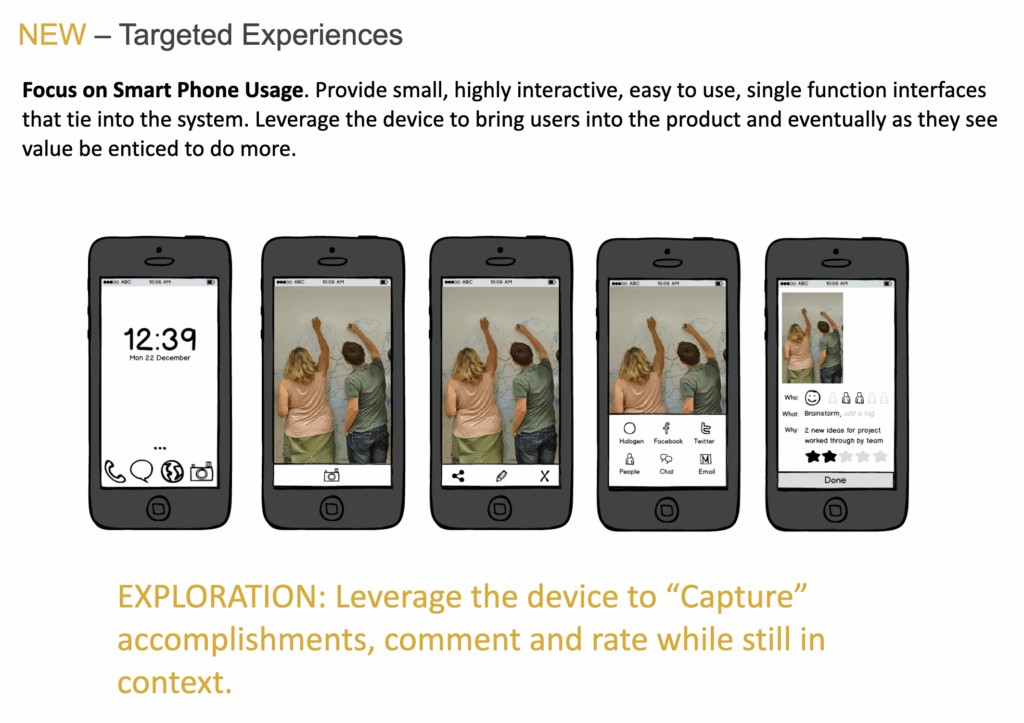
- Unconventional usage patterns and lack of mobile readiness
- Weak value proposition for end users, functional gaps
- Broken and missing workflows and inefficient interactions
- Low clarity of state and urgency
- Form complexity and major usability issues
- Limited user guidance
- Poor user assistance
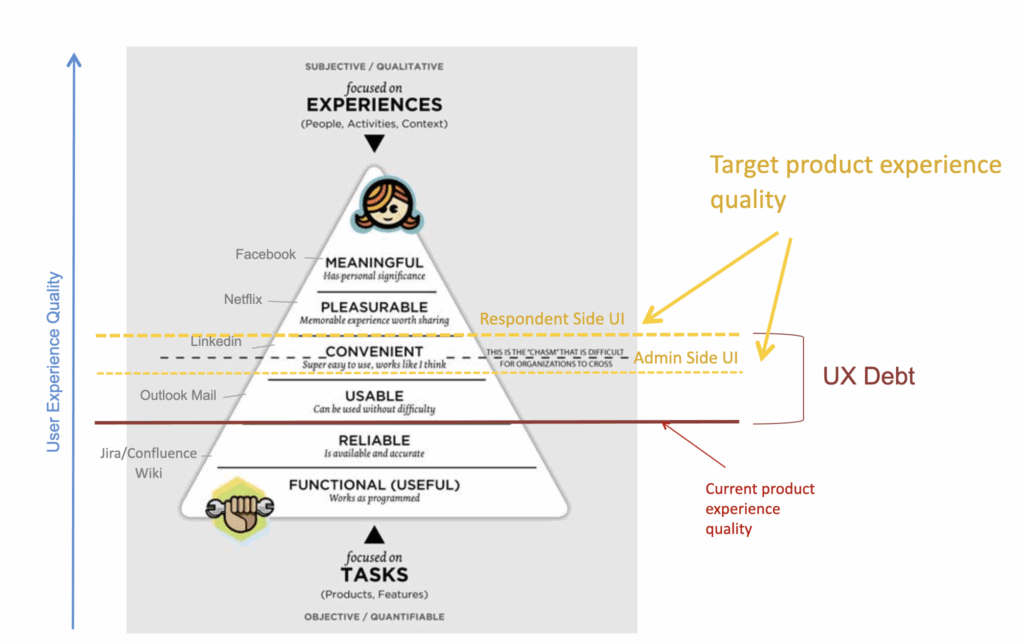
Together, we established a forward-looking UX vision, defined a strategic design direction, and built a phased roadmap to systematically modernize the experience, reduce UX debt, and align future solutions with both user needs and business goals. Including the following elements:
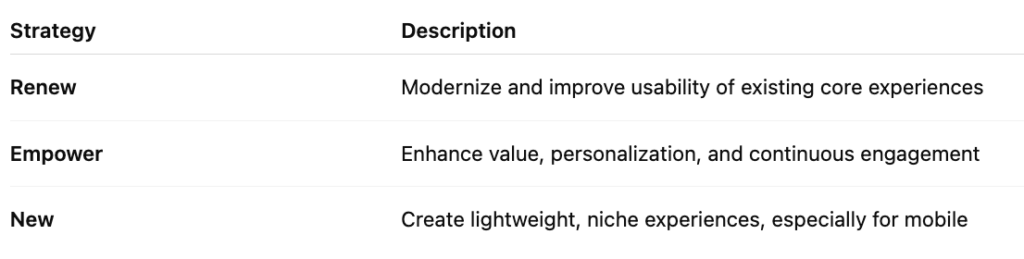
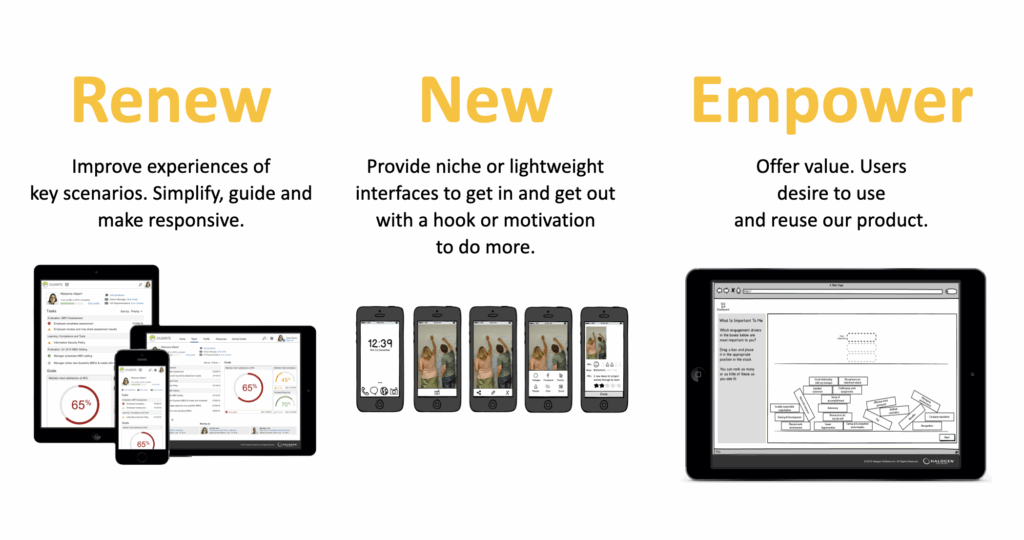
We set targets for both the consumer and admin users, novice and advanced segments. We defined a three-tier model, aligning design direction to user maturity and usage behavior,
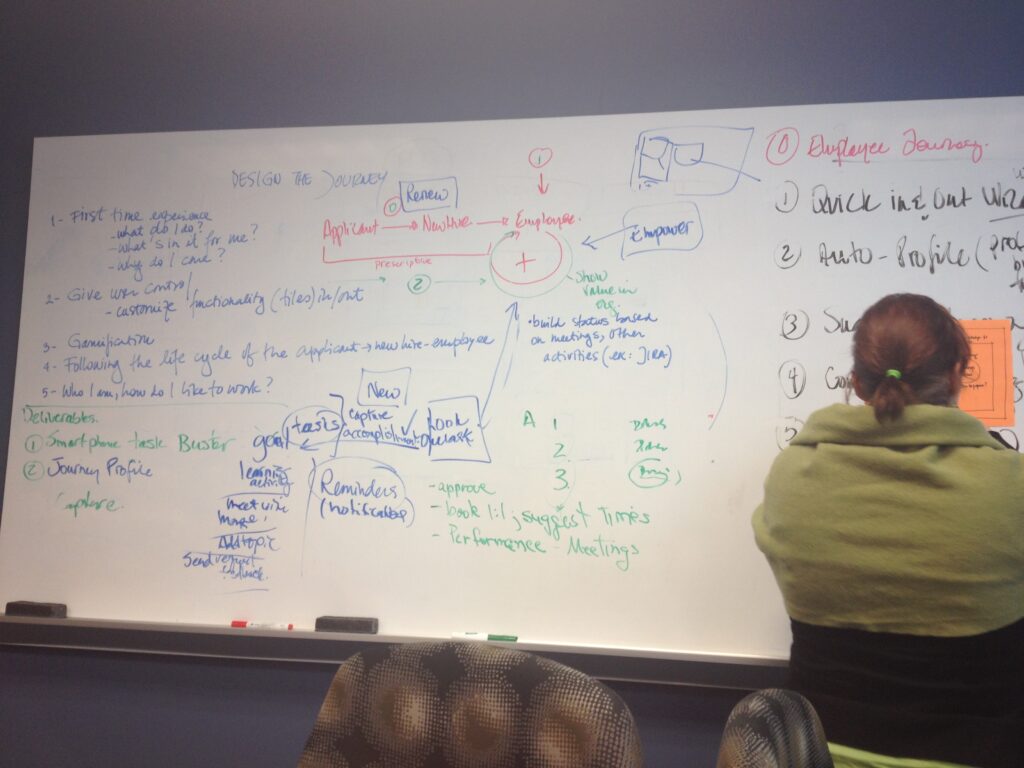
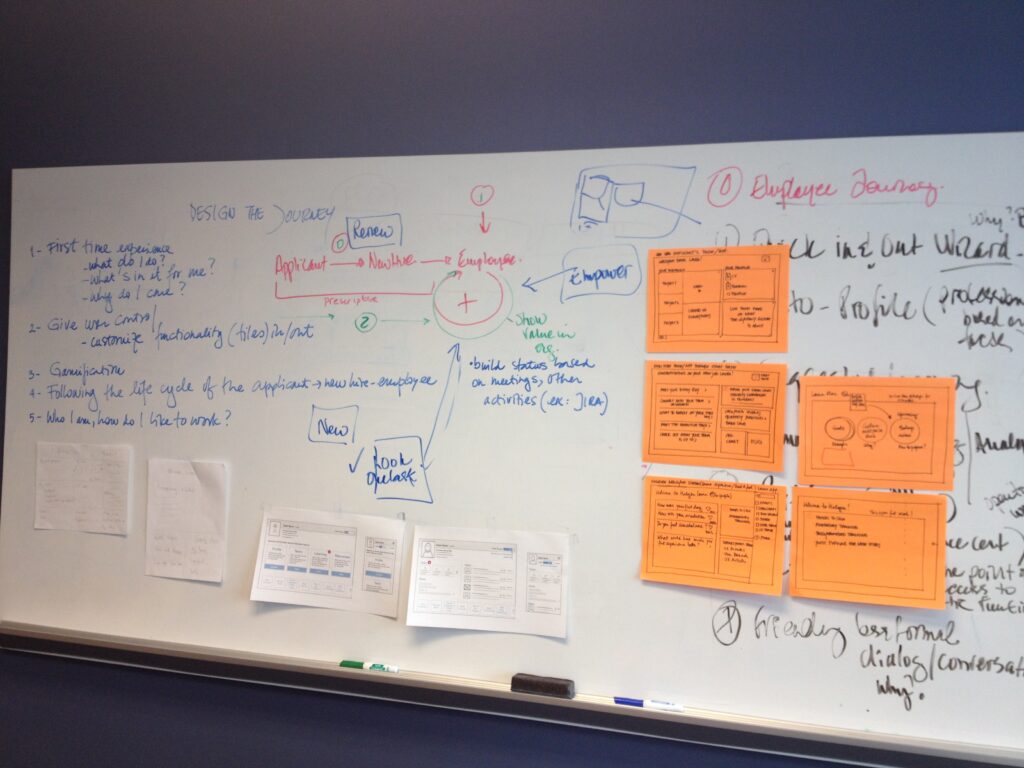
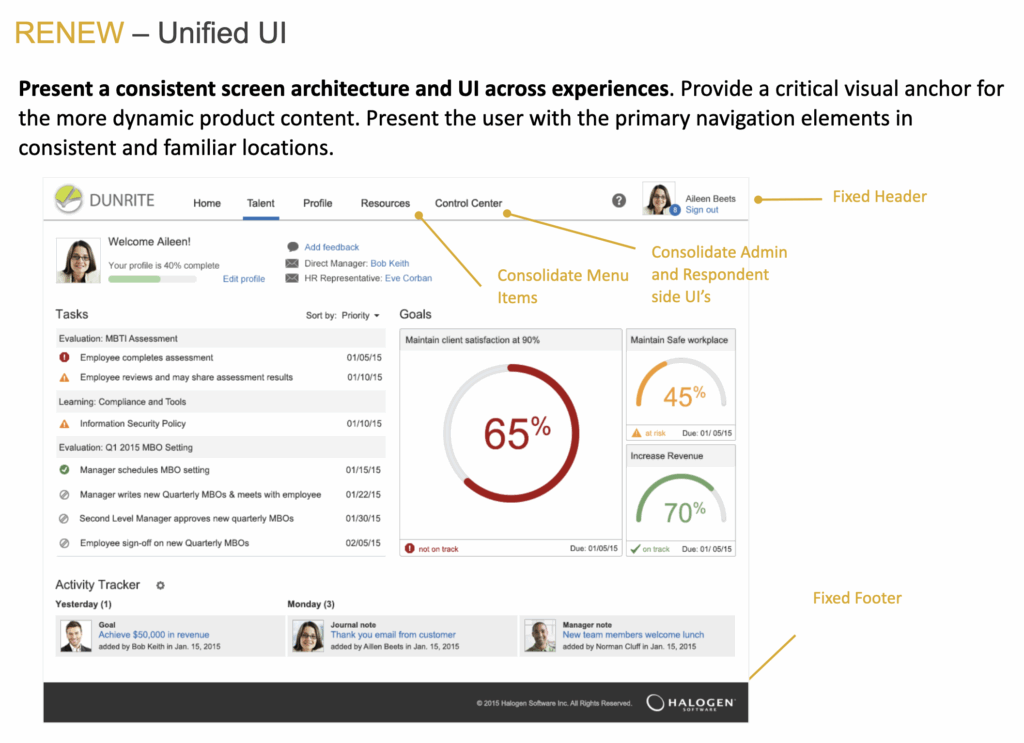
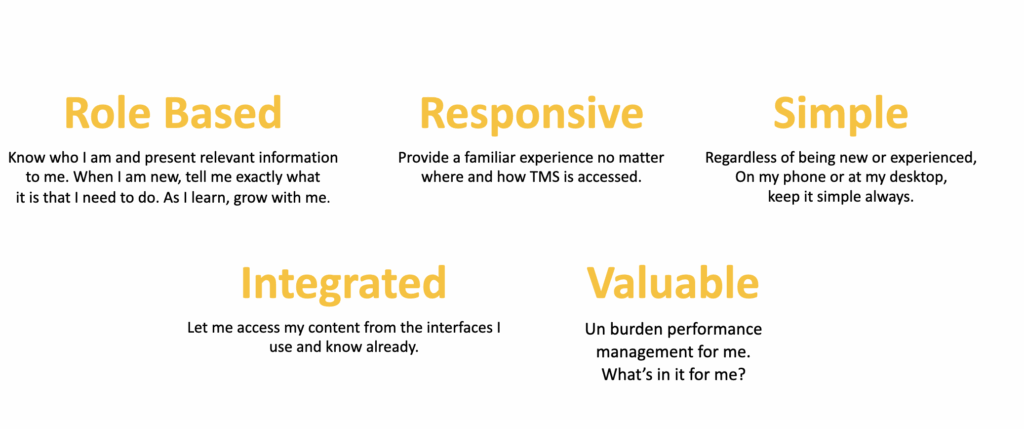
Including the definition of future-state UX principles, unified workflows through concept mockups and prototypes, storytelling to connect pain points to future solution opportunities and demonstrate how a platform-wide design system would enable scale.
Integral to the project was the creation of an implementation roadmap. Together with stakeholders we aligned on plan with 4 key components in mind.
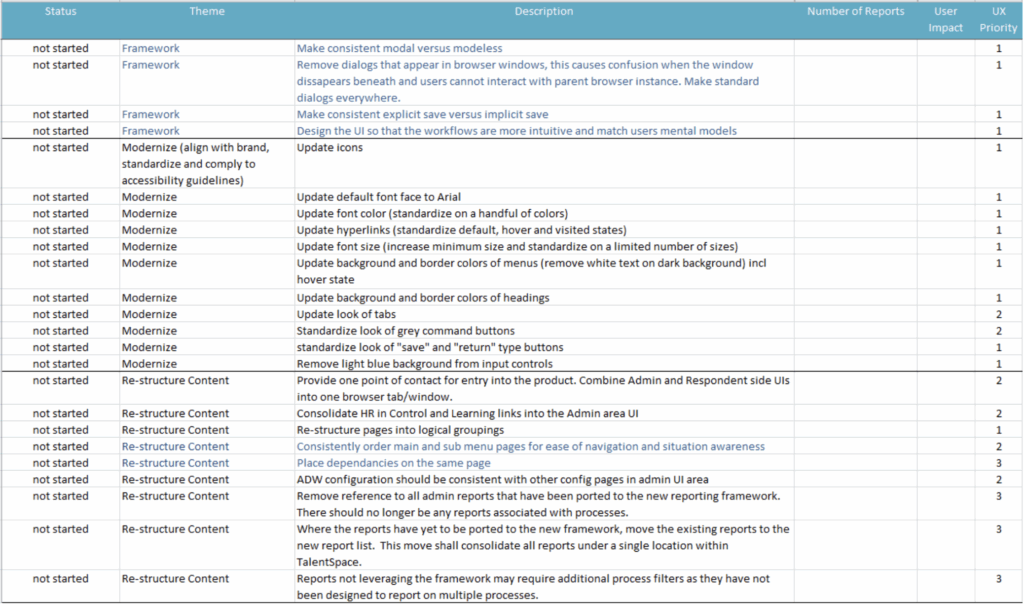
Visual Modernization
Cosmetic updates: typography, icons, layout clarity
Long-term: remove visual clutter, improve data focus, highlight urgency and state
Workflow Normalization
Simplified complex journeys into cognitive steps
Standardized interactions across Admin, Learning, and Talent modules
Responsive Framework
Scalable architecture for desktop, tablet, and mobile
Touch-optimized layouts and navigation consistency
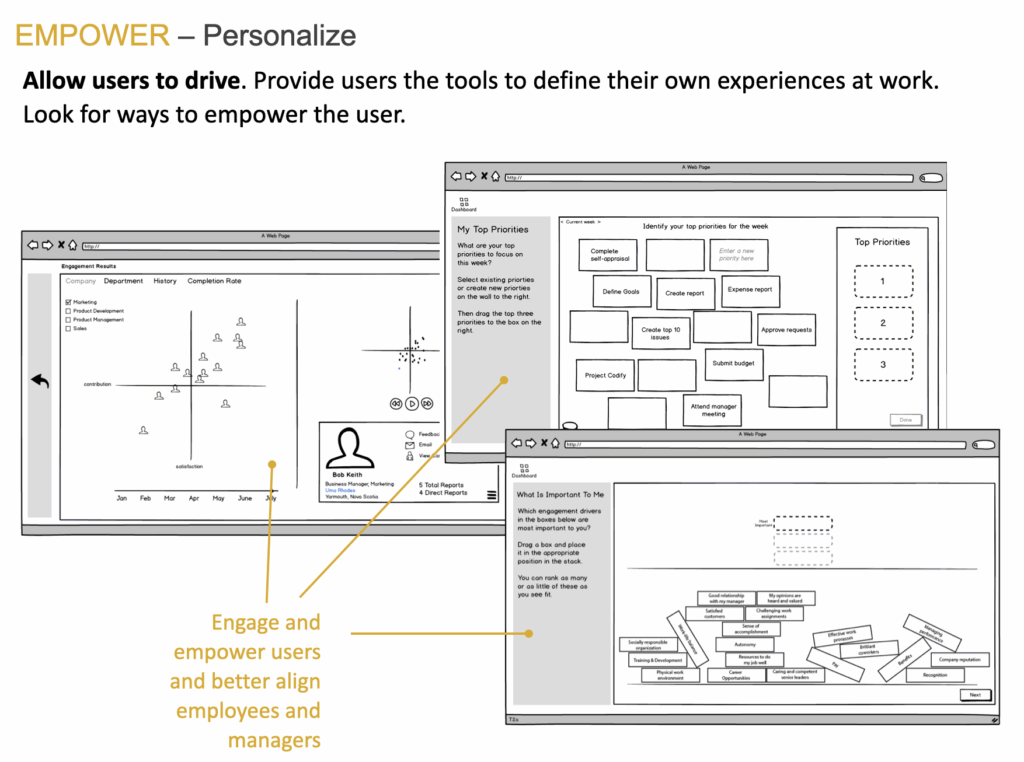
Empower Users
Personalized dashboards and role-specific landing pages
Contextual capture of accomplishments and feedback
IMPACT
This project demonstrated the difference between designing features and designing systems. Instead of patchwork fixes, we defined a comprehensive UX vision that optimized usability, aesthetics, workflows, device compatibility, and long-term scalability.
- The vision set the stage for long-term scalable UX evolution
- Created frameworks for visual, responsive, and workflow standards
- Defined a repeatable UX improvement roadmap
- Inspired the launch of niche mobile interfaces and personalization features
- Laid the foundation for modernization across entire product ecosystem
LESSONS LEARNED
This UX Vision created a foundational shift—turning design from tactical support into a strategic, future-shaping function.
What the team learned:
- Vision must be visual, inspiring, and feasible
- UX leadership requires storytelling, not just design
- Stakeholders align faster when they can see the future
ARTIFACTS
Artifacts created by the team included:
- Vision Presentation
- As is and To be Journey maps
- Design Principles
Vision prototype mockups - Design system early components